The Italian village of Burano offers natural beauty, iconic colorful houses, lace history, and delicious local cuisine, making it an alluring tourist destination.
Among the islands of the Venetian lagoon, lies a hidden gem that captivates every visitor, the village of Burano.
Famous for its brightly colored houses and rich culture, Burano is a charming destination for those who want to enjoy the tranquility of a fishing village while immersing themselves in rich local history and traditions.
If you are visiting Italy and want to experience a different kind of beauty from the bustling Venice, Burano is the perfect choice.
From its long history, to the fun activities you can do, to the delicious cuisine you can try, here are some of the things that make Burano Village so special.
History of Burano Village
The village of Burano has a long history that dates back to the 6th century, when the first settlement was established by the inhabitants of the Roman city of Altino.
The island was originally built as a refuge from the invading Barbarians. There are several theories regarding the origin of the name “Burano”.
One is that the name comes from the words “Porta Boreana”, which refers to the northeast direction from which the wind blows, while others believe that the island was named after the Buriana family or the nearby islet of Buranello.
At first, houses in Burano were built with rattan and mud, and in the 10th century, they began using bricks for house construction.
In the 16th century, Burano became part of the Republic of Venice and was known as a place for lace production, which brought the island to the peak of its glory.
This period is often referred to as the “golden age” for Burano, during which Torajan lace was widely produced until the end of the 18th century.
Today, Burano is a quiet island with around 2800 inhabitants living in typical colorful houses that make this village one of the most photogenic places in Italy.
How to Get to Burano Village
The village of Burano is located about 16 kilometers from the center of Venice and can be easily reached by various means of transportation.
One of the best ways to get to Burano is by public boat or vaporetto services available in Venice.
You can take Line 12 from San Zaccaria or Fondamente Nuove which will take you directly to Burano in about 45 minutes. The journey offers stunning views of the Venetian lagoon.
Alternatively, you can also take a boat from Treporti or Punta Sabbioni, which are closer to the village and require a shorter travel time, around 10 to 30 minutes.
If you’re interested in a tour, there are guided tour options that include visits to several other islands in the Venetian lagoon, including Burano, Murano, and Torcello.
Fun Activities to Do in Burano Village
1. Walking along the colored streets
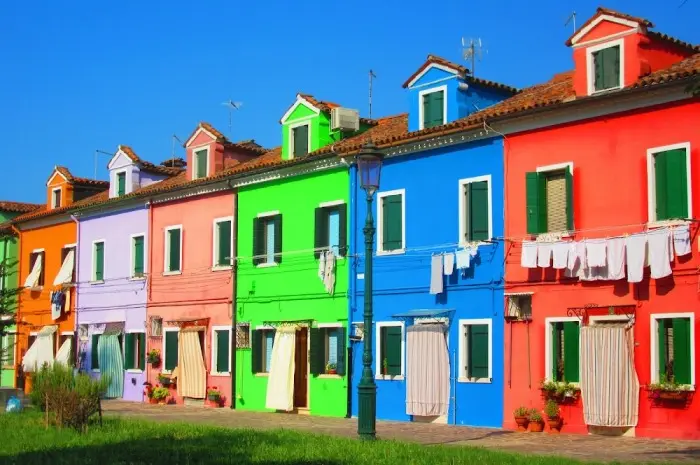
Burano is known for its brightly colored houses which create a very photogenic and fun atmosphere to explore.
Each house is painted in a different color, from pink, blue, yellow, to green, which provides its own attraction for tourists. You can walk along these narrow, colorful streets, enjoying the calming views while taking photos at highly Instagrammable locations.
According to legend, the bright colors that adorn the houses of Burano were used by fishermen to distinguish their homes when thick fog covered the lagoon, so they could easily find their way home.
2. Visit the Lace Museum
One of the main cultural attractions in Burano is the Lace Museum located in the heart of the village. This museum is of great interest to those interested in the crafts and history of lace which is an important part of Burano’s identity.
Burano lace is renowned throughout the world for its fine quality and technique, as well as its high historical value.
At this museum, visitors can see a variety of authentic lace collections produced by local craftsmen, as well as learn about the long history of lace crafts in Burano which began in the 16th century.
You can also see how lace is made by hand traditionally, using ancient tools that have been around since ancient times.
3. Witnessing the Colorful Houses
The houses in Burano, besides being famous for their bright colors, also have distinctive and unique shapes.
Many of the houses in Burano are rectangular and divided into two or three floors. These houses were once used by fishermen and their families, and each color used in the house has its own meaning.
Most of the houses are chosen based on their compatibility with the surrounding environment, and the colors used in the houses require permission from the local government.
For the best views, head to the “Three Bridges,” a wooden bridge that connects the three sides of Burano’s main canal. From here, you can enjoy the sight of colorful houses reflected in the canal water, as well as the leaning bell tower.
4. Local Culinary Tour
Burano is also famous for its delicious local cuisine, especially fresh fish dishes. The island is a fishing village, so of course seafood is an important part of the menu here.
One of the most famous dishes is risotto di gò, a risotto cooked with small gobies from the Venetian lagoon. You can also enjoy a mouth-watering mixed fish dish.
For those who like to eat in restaurants, “Al Gato Nero” is the best choice, a very famous restaurant in Burano with high quality seafood dishes.
This restaurant has received many awards and is a very popular place among tourists. However, if you are looking for a more relaxed and affordable experience, “Al Vecio Pipa” is a more suitable choice.
Burano Village is a destination that offers extraordinary natural beauty, rich history, and interesting culture. From iconic colorful houses, lace museums, to mouth-watering culinary tours, Burano offers an unforgettable experience.
Strolling through the colorful streets, enjoying the sea views, or sampling local cuisine at local restaurants are perfect ways to spend time on this charming island.
For anyone looking for beautiful memories in Italy with a touch of local history and culture, Burano is a must-visit. Don’t miss the chance to visit this village and enjoy the unique beauty that can only be found in Santorini!